Single-Player vs Multiplayer - Two Very Different Ways to Play
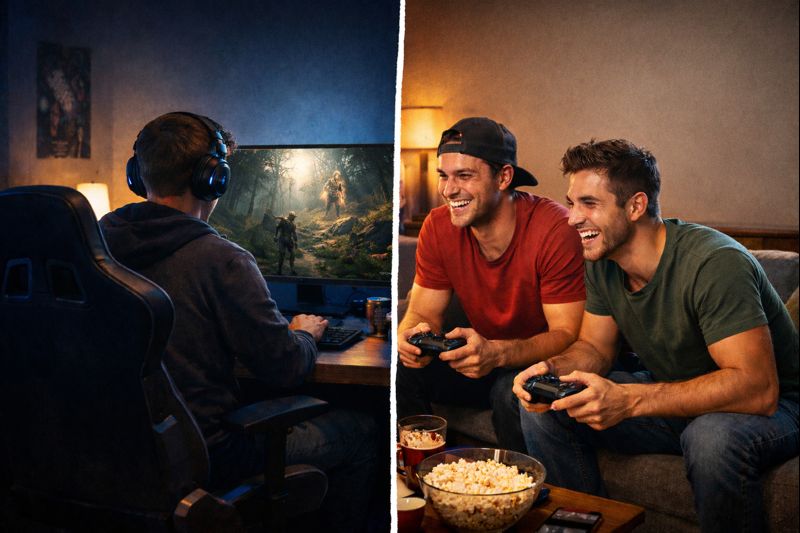
Gaming is often discussed as a single medium, but in practice it splits into two very different experiences: single-player and multiplayer. They share technology, controls, and platforms, yet they ask completely different things from the player.
Single-player games are built around immersion and control. The pace is set by the player, the world waits, and the experience unfolds without pressure from others. These games are about presence - being alone in a space designed to respond only to you. They allow for pauses, reflection, and emotional buildup in a way that doesn’t depend on performance or comparison. When done well, single-player games feel personal, almost private.
Multiplayer games, by contrast, are about interaction and unpredictability. The experience is shaped not just by systems, but by other people. Every match is different because every opponent or teammate brings their own decisions, habits, and mistakes. Multiplayer thrives on momentum, tension, and shared moments - wins feel earned, losses feel immediate, and nothing truly pauses.
The difference isn’t about which is better, but about what the player is seeking. Single-player rewards focus and narrative commitment. Multiplayer rewards adaptation, communication, and repetition. One values completion and memory; the other values mastery and rhythm. Trying to force one mindset into the other often leads to frustration.
In modern gaming, the healthiest relationship with both modes is understanding their purpose. Some nights call for solitude and immersion. Others call for connection and competition. Games don’t just offer worlds to explore - they offer different ways to exist inside them.
Single-player and multiplayer aren’t rivals. They’re tools. And knowing when to choose one over the other is part of how gaming fits into life, not just leisure.